August 28th, 2014
Today it seems children are starting orthodontic treatment earlier than ever before - It’s not uncommon to see braces on elementary school children. In fact, the American Association of Orthodontists’ recommends that all children be screened at age 7. This recommendation is based on the fact that the severity of many problems can be reduced by starting treatment at an early age. Many parents wonder whether early treatment is beneficial or necessary for their child.
When treatment is started on a child who still has a number of baby teeth it is referred to as ‘phase-one’. The goal of Phase-One treatment is to eliminate serious damage to the teeth and/or reduce the need for extractions of permanent teeth and surgery in the future. Early treatment may involve a growth modification device, a habit appliance, a functional appliance, a headgear or multiple appliances. These appliances help the jaw develop in a way that will help accommodate all of the permanent teeth and improve the way the upper and lower jaws fit together. Early expansion and growth modification can often convert surgery cases into mere extraction cases. Early treatment can convert some extraction cases into simple expansion or non-extraction cases. A few patients are even able to avoid full braces as a result of early care. However, this is definitely the exception to the rule - If a child has a condition serious enough to call for treatment at age seven, it is almost certain that he or she will need to have their treatment finished in a second phase as a teenager.

Starting Orthodontic treatment at an early age can also benefit the gum tissue. The appearance of the gum tissues around the teeth is affected by where the permanent teeth grow into the mouth. If a child has a lot of crowding and the canines come in very high, the tissue over those teeth often will stay higher than the surrounding teeth, even if grafting is performed. Expanding the dental arches so that there is enough room for normal eruption helps avoid most of these gum problems.
Children who may be candidates of early orthodontic treatment include:
• Those who exhibit early signs of jaw problems, such as a crossbite (when the upper teeth fit inside the lower teeth)
• Children with severe crowding
• Children who have to have baby teeth extracted.
• Those with habits such as thumb sucking
It is Dr. Hughes’ belief that it is best to limit treatment length when possible. However, there are many cases when early orthodontic intervention is necessary. If you are wondering whether early orthodontic treatment would be beneficial for your child call Lakewood Park Orthodontics to schedule a complimentary consultation.
July 10th, 2014
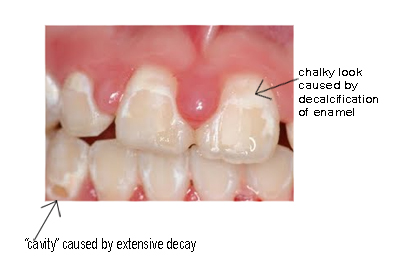
The day that braces come off is a day greatly anticipated by all orthodontic patients and orthodontists alike. It’s the day when both patient and doctor get to see the results of all of their hard work. Nothing can ruin this day quicker than discovering white spot lesions on the teeth.
White spot lesions, also called decalcifications and demineralizations, appear as white, chalky marks on the teeth. They are caused by dental plaque when acids created by the plaque remove minerals from the tooth surface changing the way the surface reflects light. The most common area for white spot lesions is between the gums and the brackets where brushing is most difficult. Many times white spots develop under swollen gum tissue making their detection difficult until after the braces are removed and swelling subsides. University studies have found that white spot lesions occur in 24% of adolescents who have never had braces. This number jumps to as high as 50% in teenagers with braces! Although braces DO NOT cause white spots on the teeth, they do complicate the removal of the plaque.
In order to prevent white spot lesions great oral hygiene is necessary, especially during orthodontic treatment. Removing plaque is the only sure way to prevent these stains. At Lakewood Park Orthodontics we begin oral hygiene coaching at the very first appointment. At the new patient consultation our treatment coordinator explains the importance of removing plaque and shows a video of how white spot lesions are formed. She describes which foods and drinks need to be avoided and encourages the use of a fluoridated toothpaste in order to harden the enamel surface. She also recommends using an electric toothbrush. By the end of the consultation both patients and parents know that white spot lesions are a possibility and how to prevent them.
When the braces are put on, our assistants go through proper brushing and flossing techniques with each patient. Patients are told to brush five times a day for two minutes and to floss once each day. During treatment, our assistants and Doctor Hughes reward good brushers with wooden nickels and give additional instruction to patients who are struggling. When they notice that oral hygiene needs to be improved they point it out to the patient and family immediately. Dr. Hughes has even removed braces early from some patients with severe problems.
If you have white spot lesion on your teeth when your braces come off, it’s reassuring to know that all white spots improve a little over time. 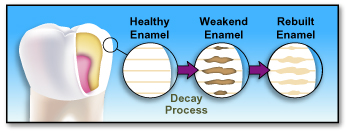 Experts advise AGAINST applying extra fluoride during the first six months as it may seal the surface of the lesion and prevent remineralization below the surface. After six months, low concentration over-the-counter fluoride rinses can be applied. Remineralization pastes (like MI Paste) can also be used to repair the tooth. Bleaching has been shown to lighten the enamel surrounding white spot lesions. White spots then blend in better and actually improve as the effects of the bleaching wear off. For more severe problems, your dentist may perform microabrasion (removing superficial white spots), cosmetic bonding (replacing damaged enamel), or place porcelain veneers (covering badly damaged surfaces).
Since white spot lesions are caused by plaque the best prevention is keeping your teeth clean by practicing proper oral hygiene techniques. If you would like additional oral hygiene instruction ask Dr. Hughes or our assistants at your next appointment.
References:
Jorgensen Orthodontics http://www.gregjorgensen.com/blog/2013/08/do-orthodontic-braces-cause-white-spots-on-teeth/#sthash.rnKxgG5n.dpuf
Ora Media Dental Self-sufficiency http://mizar5.com/demin.htm
May 19th, 2014
http://s1280.photobucket.com/user/bblakeney1/media/IcecreamSocialInvite_zpsbe9d8e41.jpg.html" target="_blank">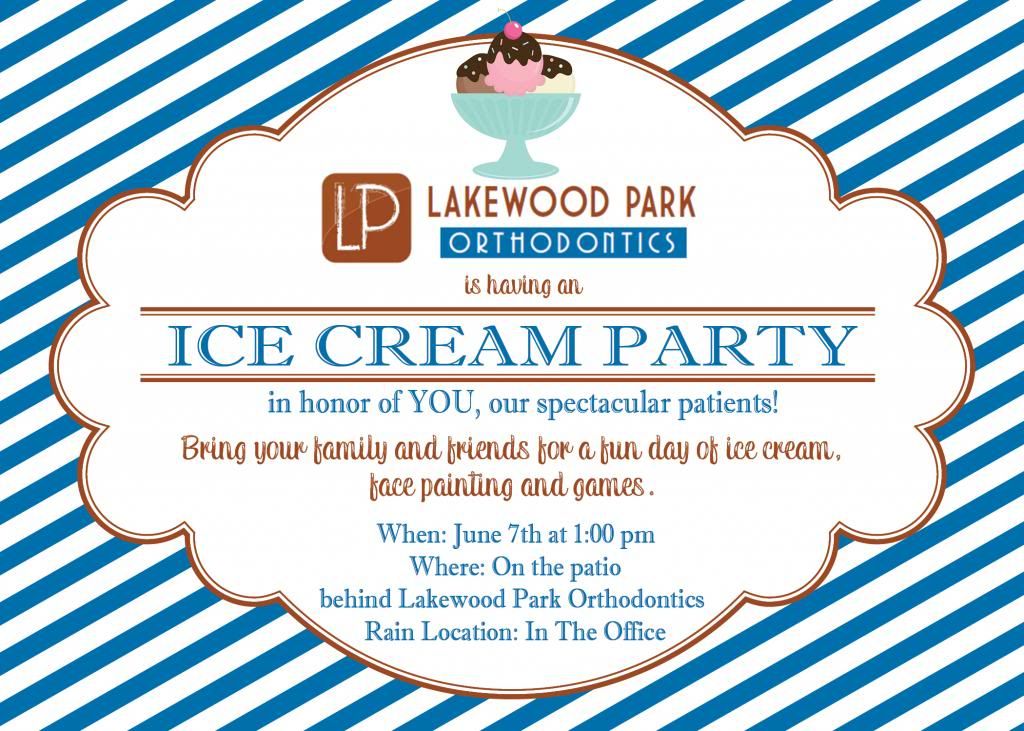 ">
">
April 8th, 2014
At Lakewood Park Orthodontics we take pride in utilizing technology to make things easier for our patients.
The Patient Login portal offers our patients the convenience of 24/7 access to their account information.
Our patients can now check appointments online, view treatment images and x-rays, customize communication (choosing to receive email, text or phone appointment reminders), set up reminders for dependent patients and more!
If you haven't signed up already, go to Natickorthodontics.com and click the 'login' button on the top right hand corner of the page.